Help & Support
+49 (0)7195 / 9283-0
contact@unitek.eu
Opening hours: Mon - Thu: 8:00 am - 3:30 pm | Fri: closed
Opening hours: Mon - Thu: 8:00 am - 3:30 pm | Fri: closed


UniTek develops and manufactures motor controllers for machine and plant builders as well as vehicle manufacturers. Whether a proven standard unit, a targeted adaptation or a complete new development: together we find the right power electronics for your drive application.
Our portfolio covers a wide range of motor and supply concepts in a power range from 200 W to 800 kW. Development, manufacturing and technical support all take place at our site in Leutenbach-Nellmersbach, Germany.

A motor controller from our portfolio already suits the application and can be used directly.
An existing device platform is tailored to the application through adaptations to hardware, firmware, interfaces, housing or mechanical design.
If the existing technologies do not meet the requirements, we develop a new solution together with you.
An OEM project usually involves four groups of people, and each has a different question. Jump straight to where yours is answered.
At UniTek, hardware development, firmware development and manufacturing work closely together. This means technical requirements can be discussed directly with our engineers, and necessary adaptations can be implemented without time-consuming coordination across several external service providers.
Our development department supports you from the technical selection of a suitable motor controller through customer-specific adaptations to the development of new solutions and their series production.
Whether selecting an existing motor controller, a customer-specific adaptation or a new development: we tailor the approach to the scope of your project.
If a suitable standard unit exists, the focus may be on technical selection and integration. We guide more extensive adaptations and new developments in a structured way, from requirements definition through functional prototypes and validation to series production.
We clarify what it is about and whether we are the right partner.
Your input: Application description, motor data, operating point, ambient conditions, approximate quantity.
We take a closer look at your operating points and discuss system requirements and technical implementation options.
Your input: Answer questions about the application, provide the load profile.
We document the requirements in writing as the basis for a reliable quotation.
Your input: Approval of the requirements specification.
Circuit design, firmware and mechanics are created in-house. You receive a prototype for your application.
Your input: Testing the prototype in the real machine.
The test results are evaluated together. Required adjustments are incorporated into the next revision. The number and scope of development loops depend on the project requirements.
Your input: Feedback from the field test, approval of the revision.
Series production with final inspection, documentation and long-term supply.
Your input: Call-off schedule or framework agreement.
The development time depends on the project, above all on the scope of the adaptation and the test results. You will find guide values in the FAQ.
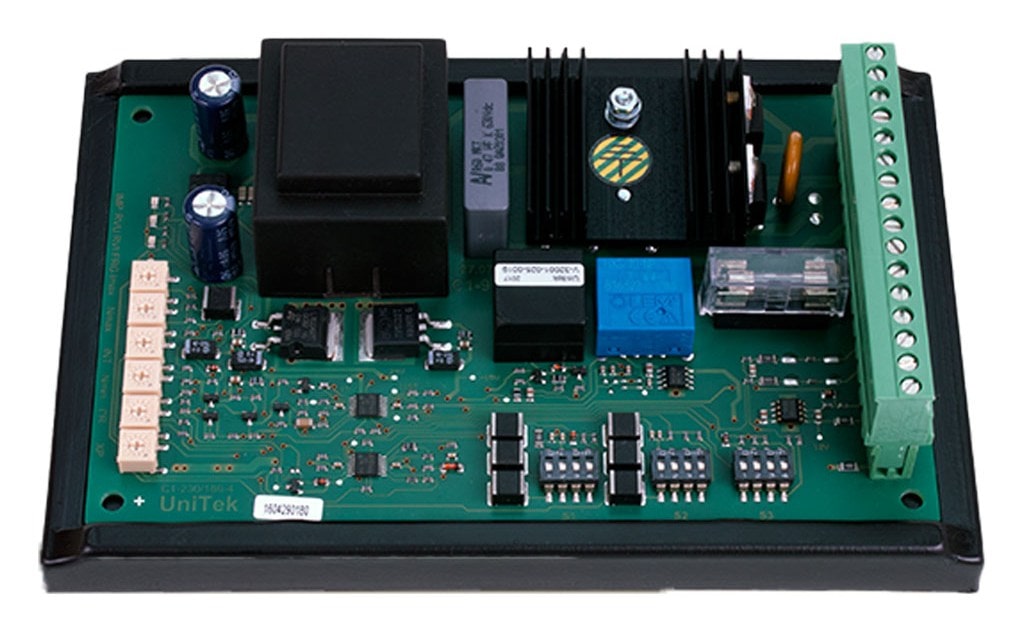
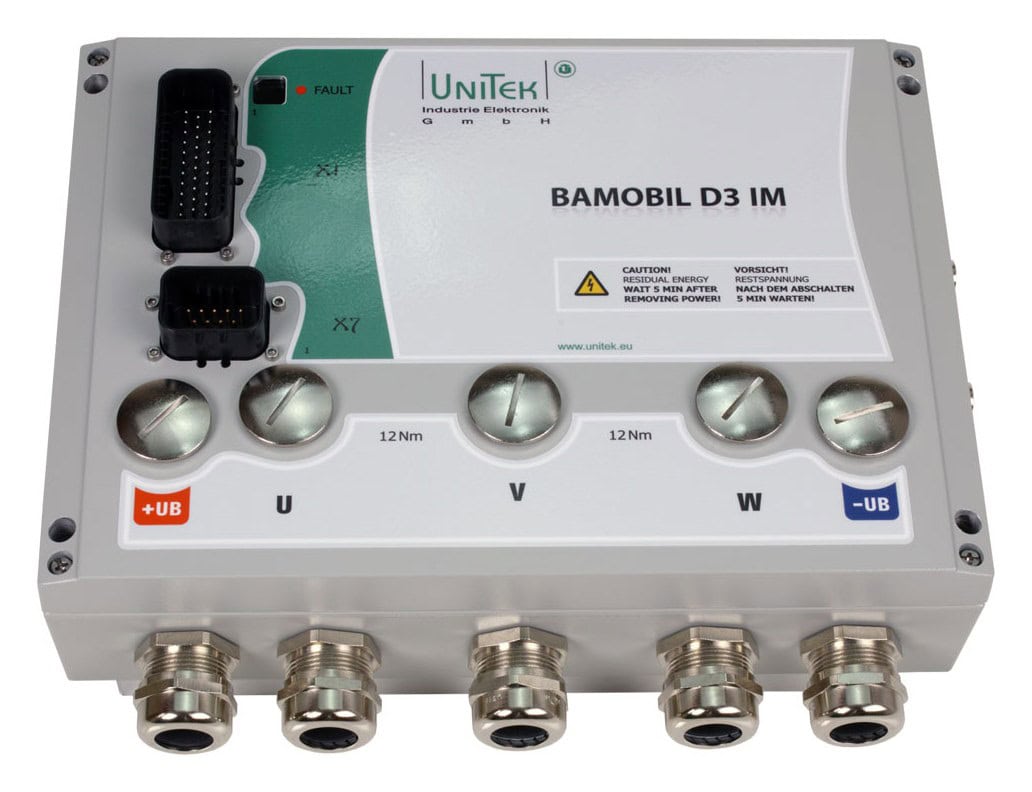
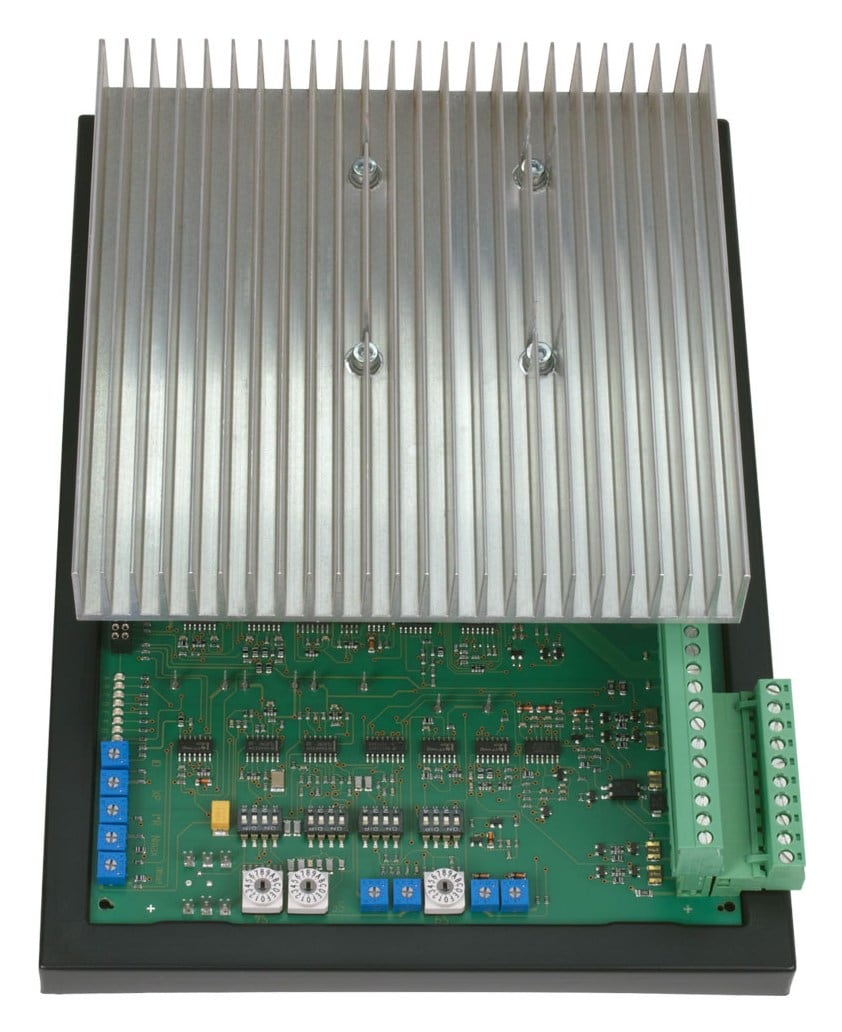
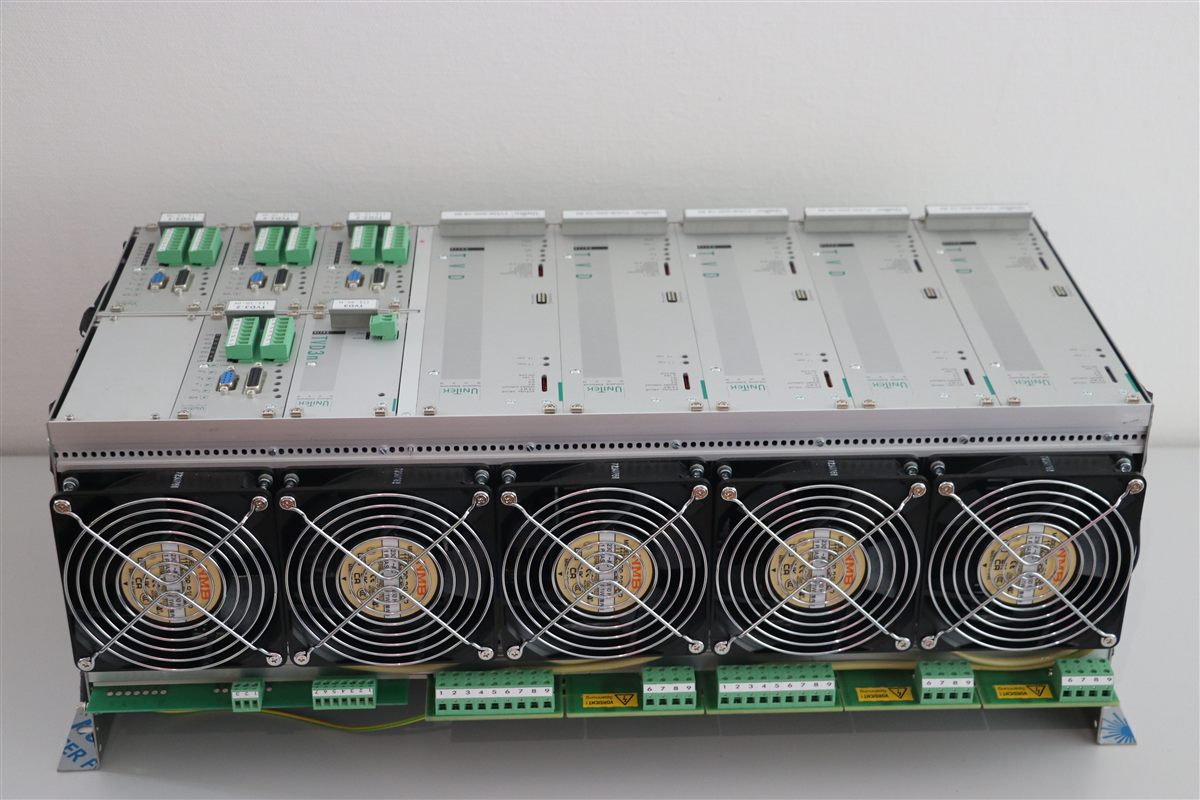
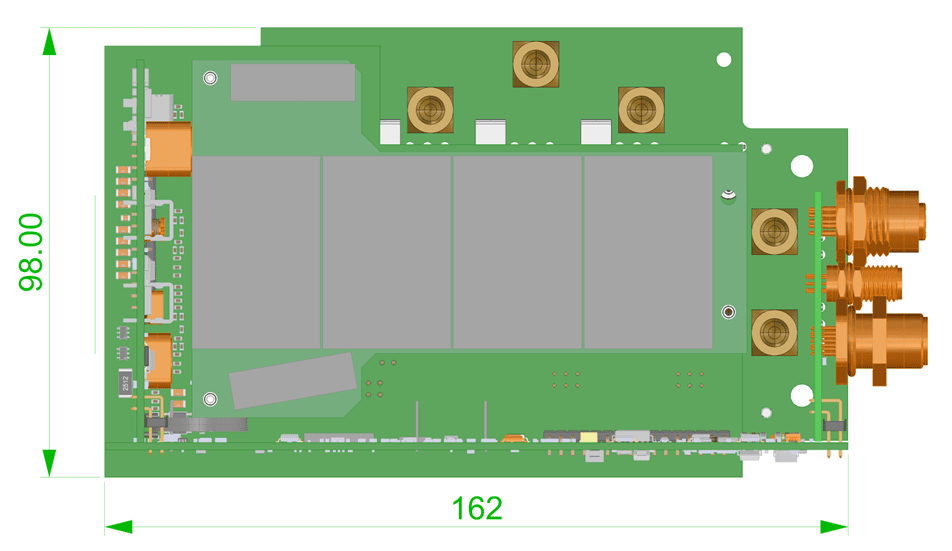
Besides the electrical sizing, installation space, cooling, mounting position and cable routing are also decisive when integrating a motor controller.
Our standard units offer various housing, cooling and mounting options. Where an existing version does not fit mechanically, we work with you to examine options for adapting the housing, connections or the layout of the electronics.
By exchanging CAD data, we can align the integration with your design as early as the project planning stage.
The kilowatts per cubic centimetre figure is of little help here, because it depends on the application. What matters is the installation space available to you.
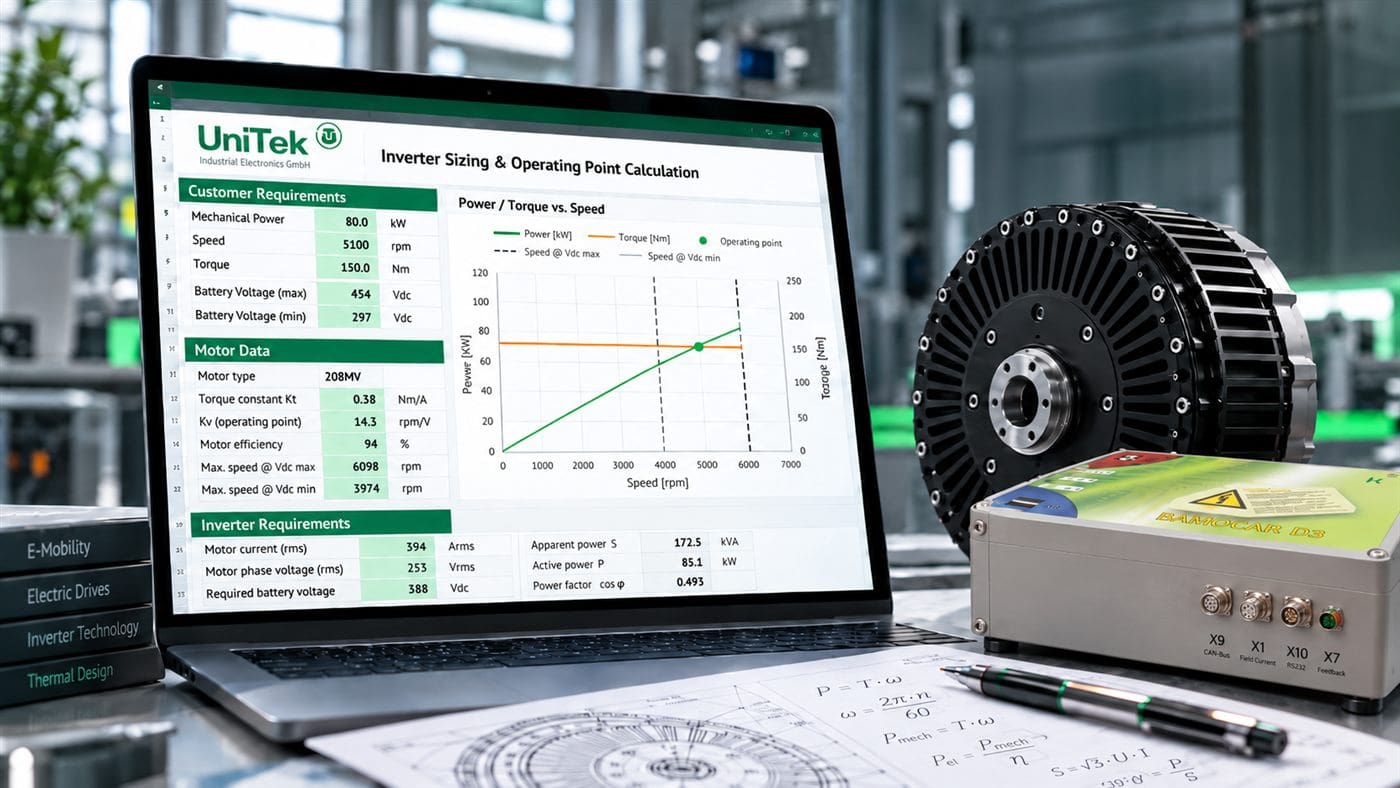
The right motor controller cannot be selected on the basis of the power rating in kilowatts alone. What matters are the required motor currents and voltages across the entire speed and torque range.
Especially in battery-powered applications, the available supply voltage changes with the state of charge and the load. This can shift the achievable operating points.
Peak values from data sheets must also be viewed in the context of the actual load profile. What matters is whether the motor controller can deliver the required currents and voltages under the intended operating conditions.
That is why we review motor data, load profile, voltage range and ambient conditions together with you before we define a suitable device version.
The following information shows the technical capabilities of our motor controller portfolio. Available functions, interfaces and voltage and current ranges vary depending on device family and version.
| Area | Available | Note |
|---|---|---|
| Control interfaces | Fieldbuses, serial interface, analogue and digital I/O | Customer-specific versions on request |
| Fieldbuses | CAN, CANopen | PROFINET, EtherCAT and Modbus in development |
| Serial interface | RS232 | Depending on device family |
| Encoder evaluation | Resolver, incremental encoder (TTL, 1 Vpp), rotor position sensor, analogue absolute encoder, digital absolute encoder (SSI) | BiSS, HIPERFACE and EnDat in development |
| Motor types | DC, asynchronous (ACI), BLDC, synchronous (PMSM, IPM) | Our algorithms are continuously developed further and adapted to customer-specific applications. |
| Voltage range | 12 V to 800 V across the entire portfolio | Not every unit covers the entire range |
| Current range | 3 A to 900 A across the entire portfolio | Not every unit covers the entire range; sizing according to your operating points |
| User software | NDrive, graphical interface, parameters can be changed during operation, integrated software oscilloscope | Free of charge, Windows, no additional drivers required |
| Protection and monitoring functions | Hardware monitoring of voltages, currents and internal error sources | Software monitoring with configurable limits for voltage, current and temperature |
Your interface is not listed? That does not mean it cannot be done. Ask us.
Three examples of where drive projects get stuck in practice. We do not name customers.
In a battery-powered vehicle application, it became apparent that the drive could not deliver the expected power across the entire operating range.
The investigation showed that the original sizing had not sufficiently taken into account how the battery voltage changes with the state of charge and under load. As a result, the achievable speed and torque ranges shifted.
By jointly reviewing motor data, voltage range and load profile, the actually achievable operating points were determined and the requirements for the overall system were specified more precisely.
More about sizingIn one customer project, the intended installation space did not allow the use of a conventional rectangular controller housing.
Based on our existing electronic components, we therefore developed a new arrangement in a custom free-form housing that can be integrated into the existing vehicle design.
This made it possible to keep using proven controller technology and fit it into the intended installation space. At the same time, the adapted housing design reduced the weight slightly.
More about mechanical integrationIn one customer application, additional open-loop and closed-loop control functions were to be implemented for which no separate higher-level controller was available.
For this purpose, the existing motor controller firmware was extended with customer-specific software functions.
This allowed the required functions to be integrated directly into the motor controller and the desired system functionality to be implemented with the existing power electronics.
Your challenge is not among them? Then describe yours to us. The initial assessment of whether it works technically costs you nothing.
Our product portfolio comprises proven analogue and digital motor controllers as well as battery and thyristor motor controllers for a wide range of industrial and mobile drive applications.
Many applications can already be realised with our existing standard units. In addition, our technologies offer options for customer-specific adaptations to hardware, firmware, interfaces and mechanical design.
Where existing solutions are not sufficient, we develop suitable new power electronics together with you.
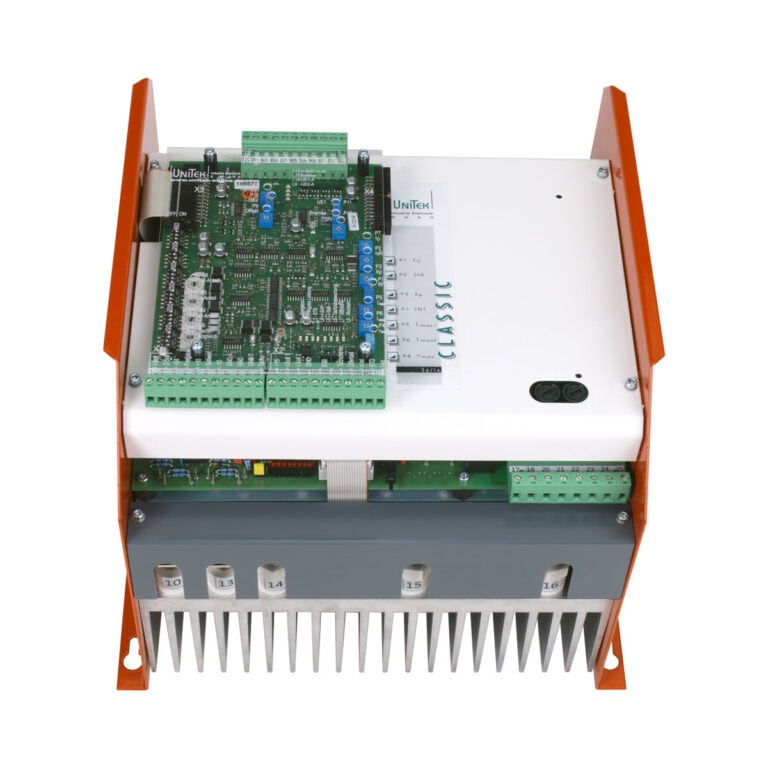
Robust converters for mains-powered DC drives, proven in industry and special machine building.
View product group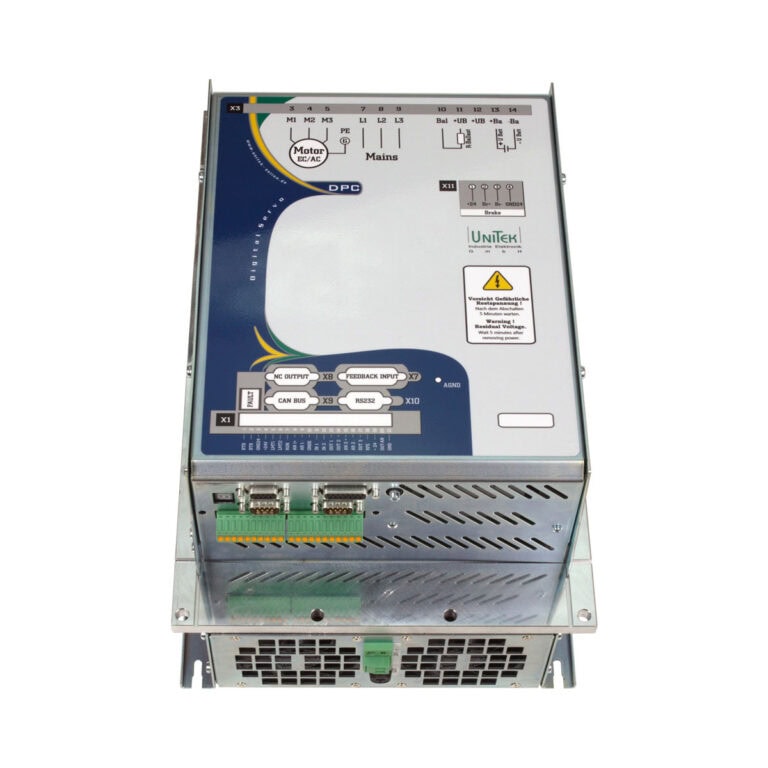
Highly dynamic servo controllers with digital control, for precision and flexibility.
View product group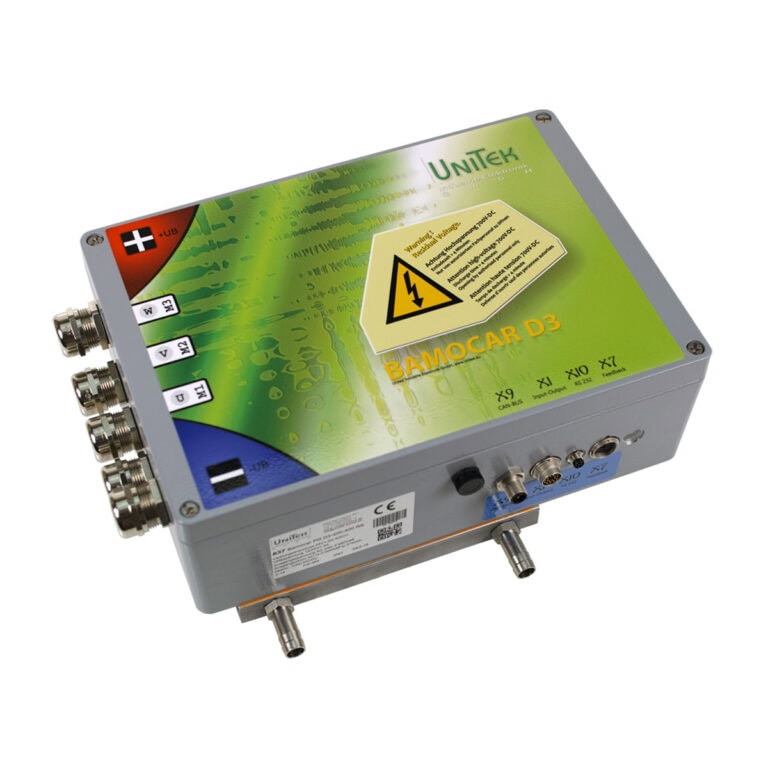
Energy-efficient drives for battery-powered vehicles, AGVs and mobile machines.
View product group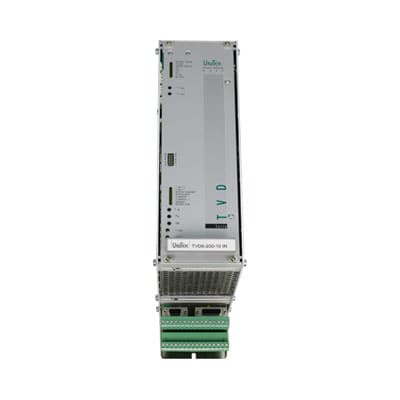
Proven analogue technology for straightforward drive tasks, cost-efficient and ready to use.
View product groupWhether a small batch or recurring series deliveries: we align production quantities, delivery terms and call-offs with your actual demand.
For regular series demand, we offer framework agreements and coordinated delivery call-offs. Smaller series are also possible. The economically viable minimum quantity depends in particular on the scope of customer-specific adaptations or new developments.
Depending on the project, development costs can be agreed separately or, with appropriate volume planning, included in the unit prices.
A key advantage is the long-term availability of our products. Many units are still available in the same or a comparable version after more than 15 years.
Our series products come with comprehensive internal development, manufacturing and test documentation.
For your supplier qualification, we provide the relevant documents such as our ISO 9001 certificate and agreed product and test documentation. We agree the type and scope of further technical documents with you on a project basis.

A new development is not always the priority. We also support you with suitable standard units and customer-specific replacement solutions when replacing discontinued motor controllers or modernising existing machines. You will find more information on our retrofit page.
A control system, such as a PLC, specifies a setpoint; a motor controller ensures that the motor actually reaches it. In a machine with six axes, the control system distributes its setpoints to six motor controllers. Each motor controller measures what is actually happening and continuously corrects. In German, the motor controller is called a Motorregler; both terms mean the power electronics between the control system and the motor. UniTek builds the motor controller, not the higher-level control system.
Often the actual operating conditions differ from the assumptions made during sizing. In battery-powered applications, for example, the supply voltage changes with the state of charge and the load. Peak values from data sheets must also be viewed in the context of the actual load profile. The calculated power is usually derived from maximum voltage and maximum current, which, however, are not present simultaneously on a continuous basis. More on this in the section on sizing.
There is no fixed threshold; what matters is the depth of adaptation. A firmware adaptation on an existing platform can pay off even at single-digit quantities. A complete new development requires either a separately commissioned development budget or a purchase volume over which the development costs can be spread.
The IP code describes how well a housing protects against foreign objects and water. Open frame means electronics without their own housing; protection is then provided by the system design. IP20 protects against contact and larger foreign objects and is intended for the control cabinet. IP67 is dust-tight and withstands temporary immersion, for example on mobile machines used outdoors. Which IP ratings are available depends on the device version. We determine together what your project needs during sizing.
The development time depends on the project and above all on the scope of the adaptation. As a guide value, the first prototype production of new hardware on an existing platform takes around 12 to 16 weeks, depending on the design effort and the delivery times for PCB material and samples. This is not a fixed delivery commitment. The number and scope of development loops after testing also affect the duration.
Two models are common, and the choice is up to the customer. If the development costs are shown separately, the unit price remains low and the investment is clearly allocated within the project. If they are spread over an agreed purchase volume, the result is a uniform unit price without a separate item.
Not every project is a good fit for us, and we would rather say so up front than after three meetings. If none of the points apply, you have come to the right place. If in doubt, we clarify this in the first conversation.
Depending on what you want to clarify, there are two ways. In the form, you first select the type of enquiry; after that, only the relevant fields are requested.
For everything related to sizing. The form asks for motor data, operating point and ambient conditions. You do not have to fill in everything, but you can see what we need for a reliable answer. Your enquiry goes directly to the development team.
Submit a technical enquiryFor a specific unit, terms, certificates, framework agreements or dates. A short form, quickly submitted. Your enquiry goes to our office and is forwarded if necessary. Even for a unit from the catalogue, we go through your application with you.
Submit a product enquiry
Are you looking for a motor controller for a new series application, want to adapt an existing unit or need a custom development?
Describe your application and your technical requirements to us. Together we will check which of our solutions is suitable.

UniTek Industrie Elektronik GmbH
Hans-Paul-Kaysser-Straße 1
D-71397 Leutenbach-Nellmersbach
Mon - Thu: 8:00 am - 3:30 pm
Friday: closed